- Home
- Services
Website Design Services
-
Web Development
Fast, responsive, scalable websites tailored to your business goals.
-
Ecommerce Solutions
Seamless, secure online stores with smooth user experience.
-
Real Estate Solutions
Innovative platforms to showcase properties and capture leads.
-
Mobile App Development
Custom iOS & Android apps to expand your digital reach.
-
Hire Dedicated Developers
Expert developers delivering quality projects on time.
Digital Marketing Services
-
Search Engine Optmization
Boost your website’s visibility and search rankings.
-
Social Media Marketing
Engage your audience with targeted campaigns.
-
Google Adwords (PPC)
Drive instant traffic with optimized ads.
-
GMB Local SEO
Increase local visibility and attract nearby customers.
IT Support
-
Web Maintenance Service
Keep your site updated, optimized, and error-free.
-
Cyber Security
Protect your business with advanced cyber defenses.
-
Domain Registration
Secure your brand identity with trusted domain registration.
-
Web Hosting
Ensure fast, reliable performance with secure web hosting.
-
- Our Work
- About Us
- Career
- Contact Us


How Modern Website Design Is Changing in the Age of AI Search
Website design is no longer only about creating an attractive digital presence. A modern website needs to communicate clearly, load quickly, provide a smooth user experience, and make its information easy to understand for both visitors and modern search engines and AI tools.
Research by web usability expert Jakob Nielsen found that 79% of users scanned new web pages rather than reading them word-for-word, while only 16% read word-by-word.
This highlights why clear headings, concise sections, and well-organized information remain important elements of effective website design.
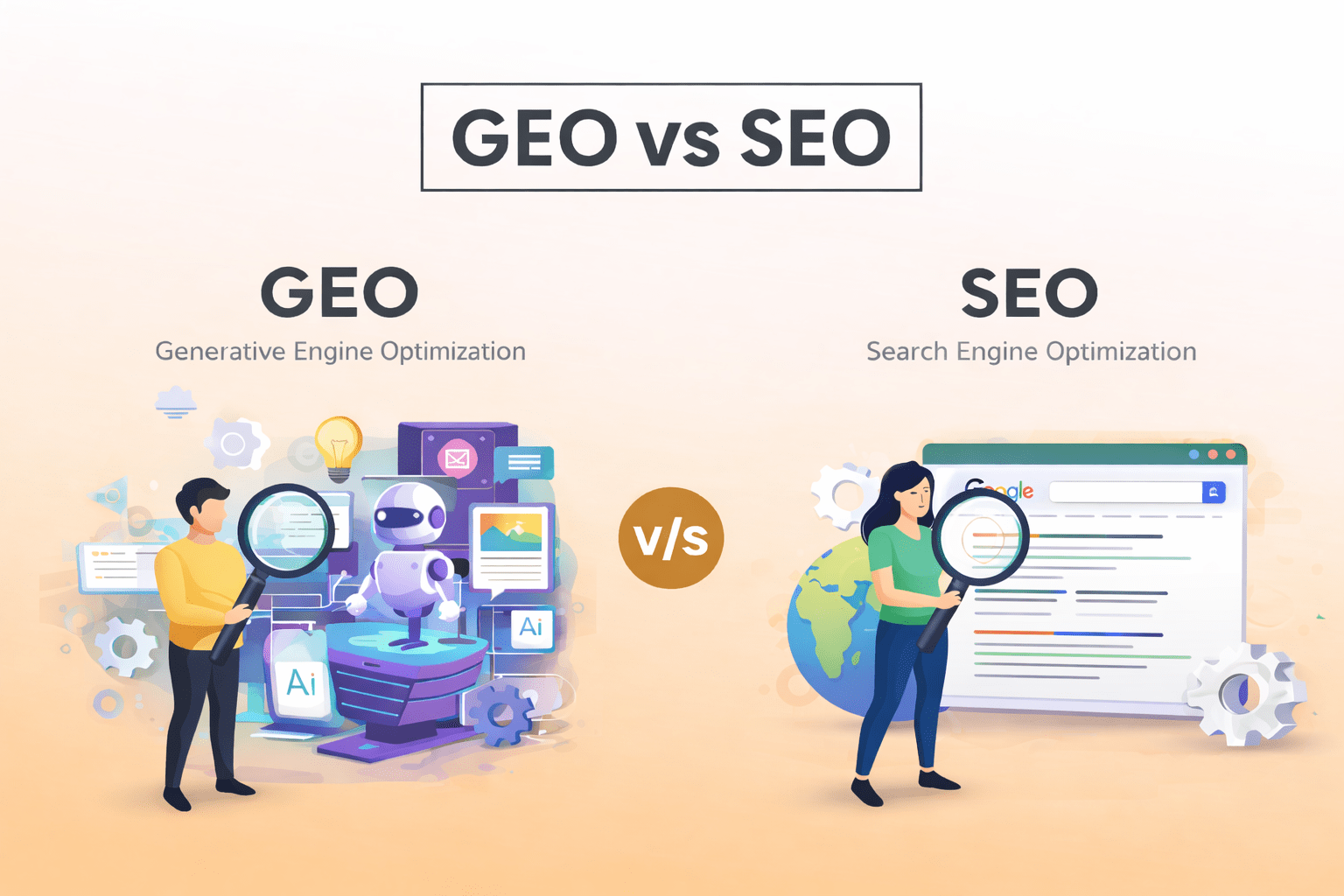
The rise of AI-powered search is changing how users discover information online. Instead of typing a short keyword and browsing several results, people can now ask detailed questions and receive summarized answers through AI-powered search experiences. Google has continued expanding AI Overviews and AI Mode, while conversational platforms are also becoming part of the way people research businesses, products, and services.
This shift does not mean traditional SEO or good visual design is becoming irrelevant. Instead, businesses need to look at website design from every important aspect, including user experience, SEO, content, and performance.
A successful website in 2026 should be designed for people, search engines, and the way people search for information online.
What Is Changing in Website Design Because of AI Search?
Traditional website design often focused on visual appeal, navigation, responsiveness, and conversion. These elements still matter, but modern websites also need to present information in a way that can be easily interpreted and connected by AI systems.
AI search systems may extract specific pieces of information from a website rather than simply presenting the homepage or ranking a complete page in a traditional results list.
That makes the organization of information increasingly important.
For example, a service page should not simply say that a company provides professional solutions. It should clearly explain:
- What the service is
- Who it is for
- How the service works
- What problems it solves
- What makes the approach different
- What customers should expect
- Frequently asked questions
- Relevant supporting information
Clear information helps visitors make decisions, while well-structured content gives search systems more context about the business.
1. Website Design Is Becoming More Information-Focused
One of the biggest changes is how design and website structure work together.
In the past, businesses sometimes prioritized large visuals, animations, sliders, and minimal text to create a polished appearance. Today, a modern website needs to balance visual presentation with useful information.
AI systems need context to understand what a page is about. Clear headings, logical sections, descriptive navigation, meaningful URLs, and related content can make that information easier to interpret. Recent guidance on AI search similarly focuses on clear structure, organized content, and strong relationships between related pages.
This means good web design is no longer simply:
“Does the website look professional?”
It is also:
“Can someone quickly understand what this page is about and find the information they need?”
2. Every Important Page Needs a Clear Purpose
AI search makes page-level clarity increasingly important.
A website may contain dozens or hundreds of pages, but every important page should have a specific purpose.
For example:
- A service page should explain a service.
- A product page should explain a product.
- A location page should explain the service available in that location.
- A blog should answer a specific question or explore a defined topic.
- An about page should establish business identity and credibility.
When a page tries to cover too many unrelated subjects, both visitors and search systems may have difficulty understanding its primary purpose.
A better approach is to give every page a clear topic and then connect related pages through logical internal linking.
This creates a website structure where individual pages make sense on their own while also contributing to a larger topic.
3. Website Navigation Needs to Become More Meaningful
Navigation is another area where website design is evolving.
A menu should not simply reflect how a company is internally organized. It should help customers understand the business and reach important information without unnecessary effort.
For example, instead of organizing a website around internal departments, a business could structure its navigation around:
- Services
- Solutions
- Industries
- Resources
- About
- Contact
The exact structure depends on the business, but the principle remains the same: organize information around user needs and clear relationships between topics.
This is particularly important as AI search systems increasingly interpret websites through their information structure rather than relying only on individual keywords.
4. Websites Need More Direct Answers
Modern visitors often want answers quickly.
Someone researching a website design service may want to know:
How long does website design take?
What does a website design project include?
How much does professional website design cost?
Is the website mobile-friendly?
Can the website be optimized for SEO?
Can an existing website be redesigned?
Instead of hiding this information behind several clicks, businesses can provide clear answers directly on relevant pages.
This can improve user experience while also creating well-defined information that AI search systems may be able to interpret more easily.
The goal is not to write content specifically for machines. The goal is to make important information genuinely useful and easy to understand.
5. Visual Design Still Matters—but Performance Matters Too
AI search does not make visual design less important.
Your website should still have a professional look, consistent branding, easy-to-read fonts, simple layouts, and clear buttons that guide visitors to take the next step.
However, visual design should not come at the expense of performance.
Heavy animations, oversized images, unnecessary scripts, and complicated page elements can make websites slower and harder to use.
Recent discussion around AI search has also highlighted website performance as part of AI discoverability because slow or technically difficult pages can make content harder for systems to access and interpret.
A modern website therefore needs to balance:
Visual appeal + usability + speed + accessibility + discoverability
6. Mobile-First Design Is No Longer Optional
People already browse websites across smartphones, tablets, laptops, and desktops. AI search does not eliminate this behavior.
A user may discover a business through an AI-generated answer and then visit its website from a mobile device.
If that website has:
- Difficult navigation
- Tiny text
- Poorly designed forms
- Slow loading pages
- Buttons that are difficult to tap
- Content that does not adapt properly
the opportunity can quickly be lost.
Responsive design should therefore be treated as a fundamental part of modern website development rather than an optional feature.
7. Structured Data Has a Bigger Role in Modern Websites
Website content can be understandable to humans without necessarily being clearly defined for machines.
Structured data can help provide additional context about entities and content on a website.
Depending on the website, this may include information related to:
- Organizations
- Services
- Products
- Articles
- FAQs
- Locations
- Events
- Reviews
Structured data is not a shortcut to appearing in AI answers, but it can contribute to a clearer technical understanding of website content when implemented correctly.
The broader principle is simple: make important information clear rather than forcing systems to guess what it means.
8. Content and Design Are Becoming More Connected
Website designers and content teams can no longer work completely separately.
A designer may create an attractive service page, but if the page has weak information architecture, unclear messaging, or poorly organized content, its effectiveness can suffer.
Likewise, excellent content may not perform well if users cannot navigate the page easily.
Modern website projects should bring together:
Design
Website design is not only about making a page look attractive. It also determines how easily visitors can find information, understand the message, and move through the website. A well-designed website uses clear sections, easy-to-read fonts, consistent branding, simple navigation, and a clean layout to make it easier for visitors to browse and find what they need. When design and usability work together, users are more likely to stay on the website and engage with its content.
Content
Content gives a website its actual meaning and purpose. It explains what a business offers, answers common customer questions, and helps visitors decide what to do next. Well-written website content should be clear, useful, and relevant to the target audience rather than simply written to include keywords. Service pages, product descriptions, FAQs, blogs, and other website sections should provide genuine value while communicating the brand’s expertise and credibility.
SEO
Search engine optimization helps make website content easier to discover when people search for relevant products, services, or information. Effective SEO involves much more than adding keywords to a page. It includes creating search-focused content, optimizing title tags and headings, improving internal linking, using descriptive URLs, addressing technical issues, and making sure important pages can be properly crawled and indexed.
Technical Performanc
A website needs to work efficiently as well as look professional. Technical performance affects page loading speed, mobile usability, accessibility, security, and the overall browsing experience. Slow-loading pages, broken links, poor mobile responsiveness, or complicated navigation can frustrate visitors and may negatively affect how they interact with a website. A technically strong website provides a better experience for users and creates a stronger foundation for SEO and long-term website performance.
AI discoverability
How clearly the information can be interpreted and referenced by AI-powered search systems. This integrated approach is becoming increasingly important as search moves from traditional rankings toward more conversational and answer-oriented experiences.
9. Internal Linking Is Becoming More Strategic
Internal links are not only useful for navigation.
They help demonstrate relationships between pages.
Imagine a website offering website design services. Its main service page could connect naturally with supporting resources such as:
- Website redesign
- Mobile-first design
- Website accessibility
- SEO-friendly web design
- Website performance
- UX design
- Conversion-focused design
These connections create a stronger information ecosystem.
Search engines and AI systems can use these relationships as contextual signals when interpreting a website. Topic clusters and internal linking are therefore becoming important parts of a modern website architecture.
10. Websites Need to Build Trust, Not Just Visibility
Being discovered is only the first step.
Once a visitor reaches your website, they need reasons to trust the business.
Modern website design should make important trust signals easy to find, such as:
- Clear company information
- Relevant experience
- Client work or case studies
- Testimonials
- Contact information
- Service details
- Transparent processes
- Useful resources
- Consistent business information
This becomes particularly important when users arrive after receiving an AI-generated recommendation or summary. The website becomes the place where they validate that information and decide whether the business is credible.
How Should Businesses Prepare Their Websites for AI Search?
Businesses do not need to rebuild their entire website simply because AI search is growing.
Instead, start with the fundamentals.
Review Your Website Structure
Check whether your important services, products, locations, and resources are organized logically.
Improve Page Clarity
Make sure each important page has a clear topic, useful headings, and direct answers.
Strengthen Internal Linking
Connect related pages so visitors and search systems can understand how your content fits together.
Improve Website Performance
Reduce unnecessary elements and optimize images, scripts, and other resources that affect loading speed.
Make the Website Mobile-Friendly
Test important pages across different screen sizes and devices.
Add Relevant Structured Data
Use appropriate schema markup where it genuinely helps describe your content.
Build Useful Supporting Content
Create articles that answer real questions your customers ask rather than producing content solely around keywords.
The Future of Website Design Is About Being Understandable
AI search is changing website design, but the fundamental goal remains surprisingly simple: make your website useful and understandable.
The difference is that websites now need to communicate with more than one type of audience.
A person wants an intuitive experience.
A search engine wants to discover and understand relevant information.
An AI system needs clear context to interpret, summarize, and potentially reference that information.
That is why modern website design is moving beyond colors, layouts, animations, and templates. The strongest websites combine design, content, structure, performance, SEO, accessibility, and clear business information into one connected experience.
For businesses considering professional website design services, this shift presents an opportunity to build a website that is not only attractive today but also prepared for how people will discover information tomorrow.
Final Thoughts
The age of AI search does not mean businesses should abandon traditional website design principles. It means those principles need to evolve.
A modern website should be visually professional, fast, responsive, easy to navigate, technically sound, and rich in useful information. More importantly, its structure should make the relationship between the business, its services, expertise, and customers clear.
Whether you are launching a new website or planning a redesign, thinking about AI search during the design process can help create a stronger digital foundation for the future.
If you are evaluating website design services for a new or existing business website, working with a website designing company in Gurgaon can help you bring design, user experience, SEO, technical performance, and modern search requirements together from the beginning.
Recent Posts








Infinite IT Solutions delivers high-performance websites, eCommerce platforms, mobile apps, and digital marketing strategies that combine technical expertise and creativity to engage users, boost visibility, and drive business growth.
ⓒ Copyright Infinite IT Solutions . All rights reserved