- Home
- Services
Website Design Services
-
Web Development
Fast, responsive, scalable websites tailored to your business goals.
-
Ecommerce Solutions
Seamless, secure online stores with smooth user experience.
-
Real Estate Solutions
Innovative platforms to showcase properties and capture leads.
-
Mobile App Development
Custom iOS & Android apps to expand your digital reach.
-
Hire Dedicated Developers
Expert developers delivering quality projects on time.
Digital Marketing Services
-
Search Engine Optmization
Boost your website’s visibility and search rankings.
-
Social Media Marketing
Engage your audience with targeted campaigns.
-
Google Adwords (PPC)
Drive instant traffic with optimized ads.
-
GMB Local SEO
Increase local visibility and attract nearby customers.
IT Support
-
Web Maintenance Service
Keep your site updated, optimized, and error-free.
-
Cyber Security
Protect your business with advanced cyber defenses.
-
Domain Registration
Secure your brand identity with trusted domain registration.
-
Web Hosting
Ensure fast, reliable performance with secure web hosting.
-
- Our Work
- About Us
- Career
- Contact Us

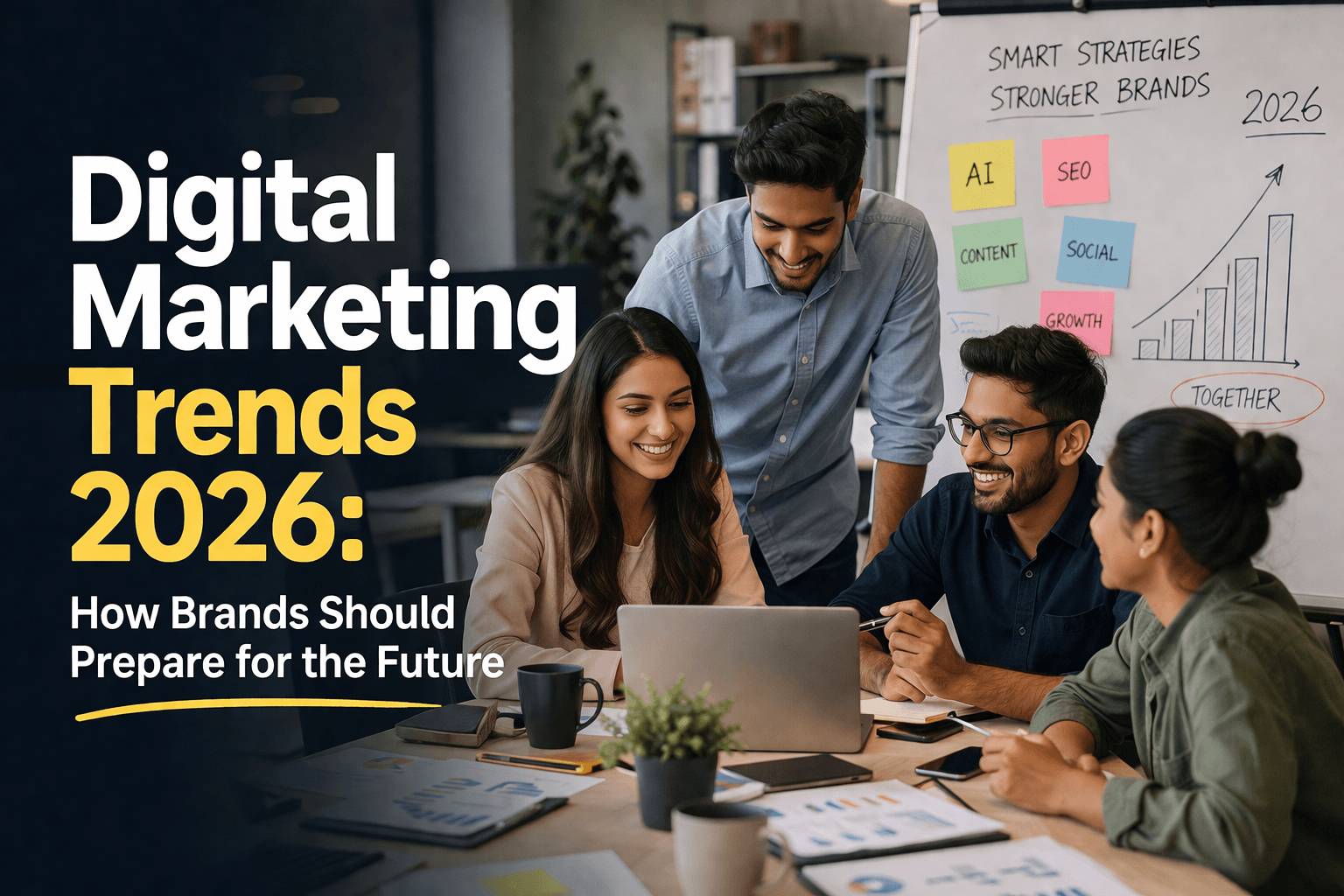
Digital Marketing Trends 2026: How Brands Should Prepare for the Future
The digital marketing landscape is evolving faster than ever—and 2026 will be the year brands must move beyond experimentation into strategic transformation. From AI-powered experiences to human-centric storytelling and sustainable value propositions, success in the next era will demand both innovation and empathy.
As a growing digital marketing company in Gurgaon, we’ve observed how rapidly these shifts are shaping business strategies across industries. In this blog, we explore the key trends shaping digital marketing in 2026 and actionable ways brands can prepare to thrive.
1. AI Isn’t Optional—It’s the Core of Consumer Interaction
Artificial intelligence has moved from a niche experiment to a universal expectation. In 2026, AI will no longer just automate tasks; it will reshape entire customer journeys. Consumers are increasingly using AI tools that blend text, voice, and visual search—transforming the way they interact with content and brands.
The search bar is becoming a creative exploration space where users expect intelligent, contextual responses rather than keyword matches. This shift is pushing every SEO company in Gurgaon and beyond to rethink how content is structured and discovered.
How brands should prepare:
- Invest in AI-driven content optimization and generative tools that create real-time, personalized experiences.
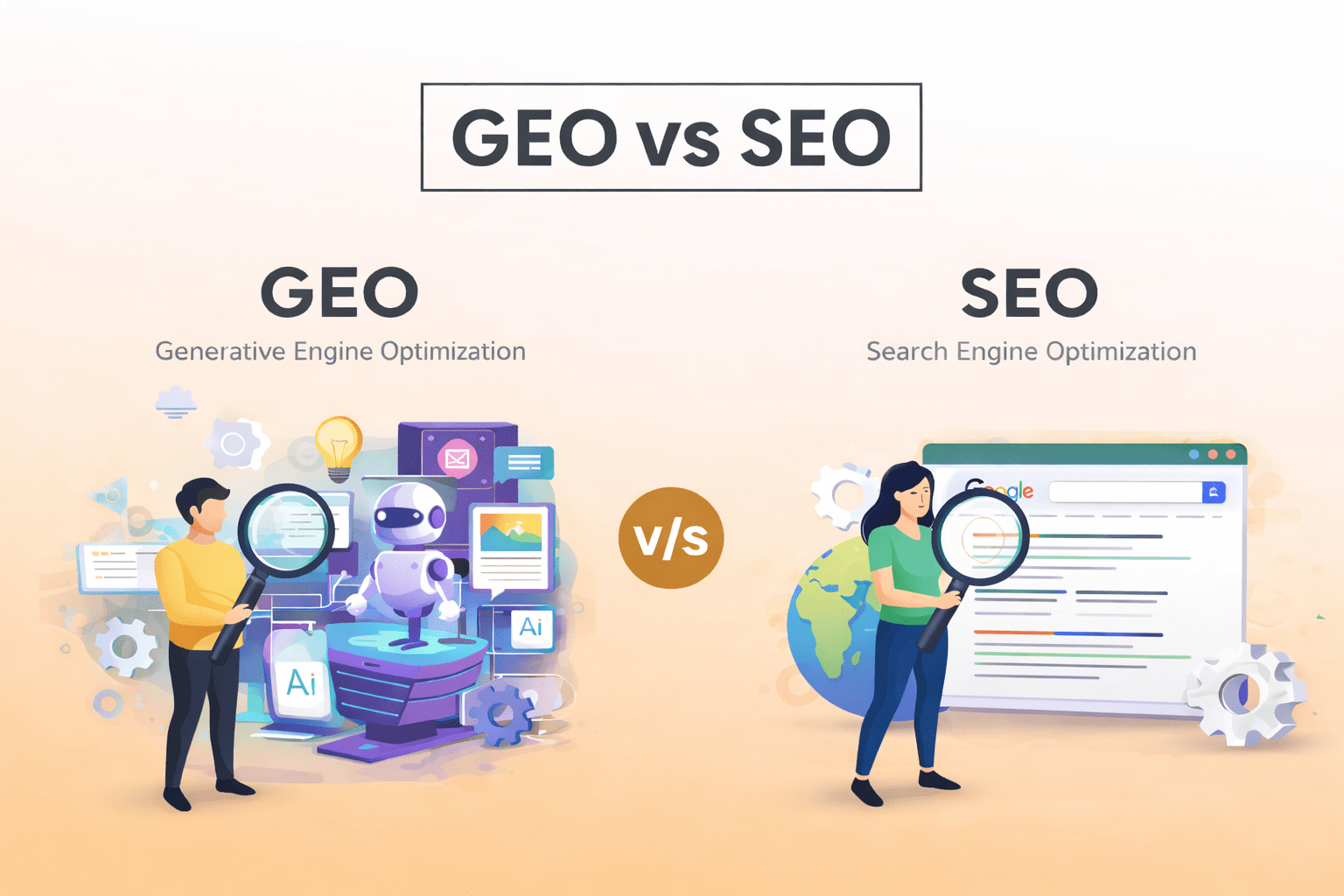
- Build Generative Engine Optimization (GEO) strategies to ensure your content is discoverable by AI assistants and conversational search interfaces.
- Leverage AI to automate repetitive tasks, freeing human marketers for strategy and creative storytelling.
2. From Campaigns to Co-Creation—Communities Drive Value
In 2026, consumers want to be part of a brand’s narrative—not just an audience. The most successful brands will move away from one-way advertising and toward co-creation with their communities.
This means empowering users to contribute content, remix brand stories, and shape products. Rather than telling audiences what a brand stands for, brands will invite users into the creative process, turning loyal followers into participants.
How brands should prepare:
- Collaborate with creators and influencers who already lead engaged communities.
- Provide assets (characters, sounds, and visuals) that audiences can remix and share.
- Host challenges, contests, and user content showcases that build shared identity.
3. Emotion Over Final Outcomes—Celebrate Moments of Progress
Consumers today are seeking experiences that deliver immediate value and joy. Instead of selling long-term results or distant outcomes, brands should highlight progress and small wins in the present.
Whether it’s loyalty programs with frequent milestones or step-by-step product journeys, offering tangible, short-term rewards builds deeper engagement.
How brands should prepare:
- Revamp loyalty and rewards systems to include micro-achievements.
- Segment customer journeys to recognize and celebrate incremental progress.
- Use storytelling that reinforces here-and-now gratification rather than distant goals.
4. Authenticity & Human Connection Are the New Differentiators
As AI scales content production, audiences are craving genuine human voices more than ever. Authentic storytelling—rooted in real people, values, and experiences—will become a core strategic advantage.
Brands must balance AI automation with human insight. AI can speed up optimization and scaling, but authenticity still wins trust. Many brands now partner with a trusted digital marketing company in Gurgaon to strike the right balance between automation and human-driven storytelling.
How brands should prepare:
- Encourage employee advocacy to share authentic brand experiences
- Create content that features real people and real use cases rather than stock templates.
- Blend AI efficiency with human creativity for storytelling that resonates emotionally.
5. Nostalgia Becomes an Engine of Engagement
In uncertain times, consumers are drawn to familiarity. Nostalgia—not as a retro trend, but as a strategic remix of past assets—can bridge generational gaps and elevate brands’ cultural relevance.
Collaborations that resurrect iconic products or repurpose beloved brand moments into new contexts have shown strong emotional appeal and engagement.
How brands should prepare:
- Audit your brand’s heritage to identify memorable elements.
- Partner with complementary IP owners for nostalgic remixes.
- Reimagine classic ads, jingles, or products in modern contexts.
6. Sustainability Must Deliver Tangible Value
Consumers no longer respond to vague sustainability pledges. By 2026, sustainability will be measured by functional benefits and authenticity—not marketing slogans.
Great examples include emphasizing product durability, energy efficiency, or cost-saving features that benefit users and the environment. This approach positions sustainability as a smart, value-driven choice rather than a compromise, helping brands build stronger customer trust, deeper engagement, and long-term brand loyalty while enhancing their overall market appeal.
How brands should prepare:
- Avoid generic sustainability messaging—focus on specific, measurable benefits.
- Highlight how products save money, time, or resources.
- Use authentic case studies to show real impact instead of lofty promises.
7. Short-Form and Immersive Content Dominate Attention
Digital attention spans continue to shrink, and short-form video (like Reels, Shorts, and TikTok content) has become the primary driver of discovery and engagement.
Gone are the days when long blog posts were the sole content kings. While written content still matters for depth and SEO, snappy visual storytelling is where brands win quick attention.
How brands should prepare:
- Prioritise short-form video strategies across platforms.
- Employ storytelling that fits mobile-first consumption habits.
- Analyze performance across channels to optimize creative formats dynamically.
8. Privacy-First Marketing Is Strategic, Not Optional
As privacy regulations tighten and third-party cookies disappear, brands must invest in first-party data and trust-driven practices. Consumers want transparency—not just compliance. Data privacy now directly influences conversion and loyalty, meaning respectful, consensual marketing isn’t just good ethics; it’s smart business.
This is why working with an experienced SEO company in Gurgaon can help brands implement privacy-first strategies without compromising performance.
How brands should prepare:
- Build strong opt-in strategies for email, SMS, and loyalty data.
- Prioritise transparent data policies and easy consent management.
- Use customer intelligence platforms that respect privacy while powering personalization.
Conclusion: The Future of Digital Marketing in 2026
Digital marketing in 2026 will be defined by AI mastery, human connection, customer co-creation, and authentic value delivery. Brands that treat these shifts as opportunities—not threats—will not only attract attention but also build long-term loyalty and impact.
To prepare for this future, start by
✅ Auditing your current tech and data capabilities
✅ Investing in human-centric content alongside AI tools
✅ Reimagining your customer journeys for immediacy and emotion
✅ Embracing innovative formats and privacy-respecting practices
The brands that succeed in 2026 won’t be the loudest—they’ll be the most meaningful, adaptive, and human . Are you ready?
Recent Posts










Infinite IT Solutions delivers high-performance websites, eCommerce platforms, mobile apps, and digital marketing strategies that combine technical expertise and creativity to engage users, boost visibility, and drive business growth.
ⓒ Copyright Infinite IT Solutions . All rights reserved